ARTICLE GUIDE
At a Glance
Matthew 25 forms the climax and conclusion of the Olivet Discourse (Matt 24–25), which constitutes the fifth and final major teaching block within Matthew’s pentateuchal structural scaffolding. Having answered the disciples’ inquiries regarding the destruction of the Second Temple and the sign of His Parousia in chapter 24, Messiah pivots in chapter 25 from prophetic prediction to eschatological exhortation.
Read moreShow less
What This Study Explores
Second Temple Judaism • Eschatology
What unifies the three judgment scenes in Matthew 25?
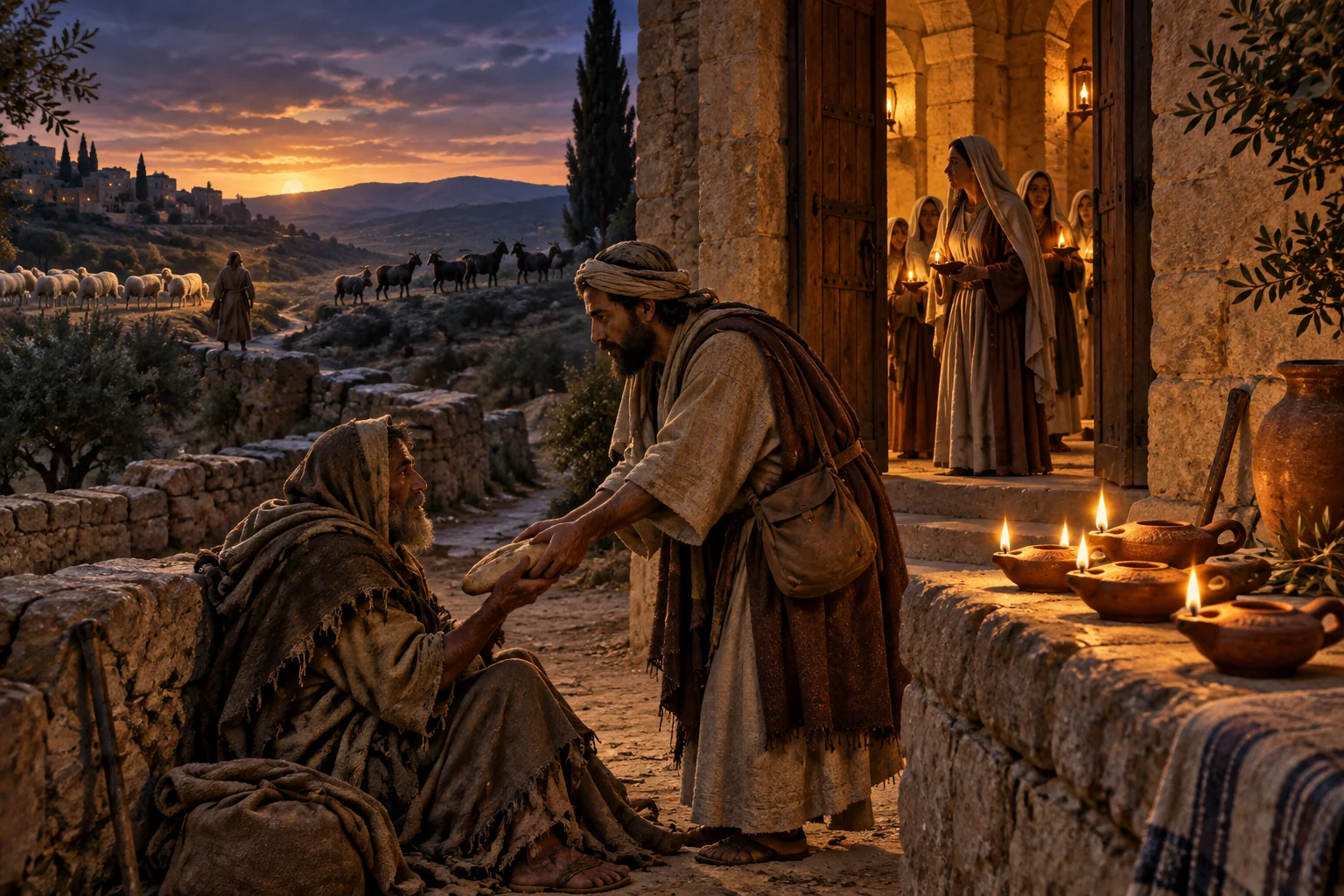
The Ten Virgins, the Talents, and the Sheep and Goats together define faithful readiness during the King’s delay. Genuine allegiance perseveres, risks entrusted resources for the kingdom, and becomes visible in mercy toward the vulnerable.
These deeds are not an alternative works-based route to salvation. They are the public fruit of Spirit-enabled covenant fidelity before the returning Son of Man, whose judgment discloses whether professed disciples truly know and embody the character of their King.
Key Claims
- Matthew 25 concludes the Olivet Discourse by shifting from prediction to sustained eschatological exhortation.
- The oil signifies enduring readiness that cannot be borrowed at the moment of crisis.
- The talents portray kingdom stewardship; fearful passivity is exposed as unfaithfulness.
- The Son of Man judges all nations and identifies himself with “the least of these.”
- Merciful action functions as evidence of living faith, not a competing basis of redemption.
Interpretive Context
The three pericopes belong to one narrative setting: the delayed but certain parousia following Jesus’ temple discourse. Their shared emphasis is accountable discipleship, so symbolic details should serve the chapter’s ethical and eschatological force rather than become speculative allegory.
Within the promise-plan, the enthroned Davidic Messiah gathers and judges the nations while extending Abrahamic blessing. The multiethnic kingdom does not replace Israel; Gentiles share Israel’s cultivated root while God’s gifts and calling remain irrevocable.
Selected Scholarship
- W. D. Davies and Dale C. Allison Jr., Matthew 19–28.
- R. T. France, The Gospel of Matthew.
- Donald A. Hagner, Matthew 14–28.
- Craig S. Keener, A Commentary on the Gospel of Matthew.
- Walter C. Kaiser Jr., The Promise-Plan of God.
Scripture Connections
Matthew 25; Matthew 7:22–23; Matthew 7:21–23; Romans 14:10–12; 2 Corinthians 5:10; 1 Corinthians 3:10–15; James 2:14–26; 1 Thessalonians 5:1–11
Continue on Substack
The complete article remains on Rabbit Room Apologetics at Substack.
Originally published September 6, 2026. This WordPress page is a discovery guide; the complete article is hosted on Substack.