ARTICLE GUIDE
At a Glance
Exodus 2 marks a critical transition in the organic unfolding of God’s redemptive promise-plan. Following the compounding cosmic fractures of Eden, the Watchers, and Babel, Yahweh initiated His restorative agenda by electing Abraham, pledging land, seed, and global blessing.
Read moreShow less
What This Study Explores
Promise-Plan Theology
How Does Exodus 2 Prepare for Israel’s Deliverance?
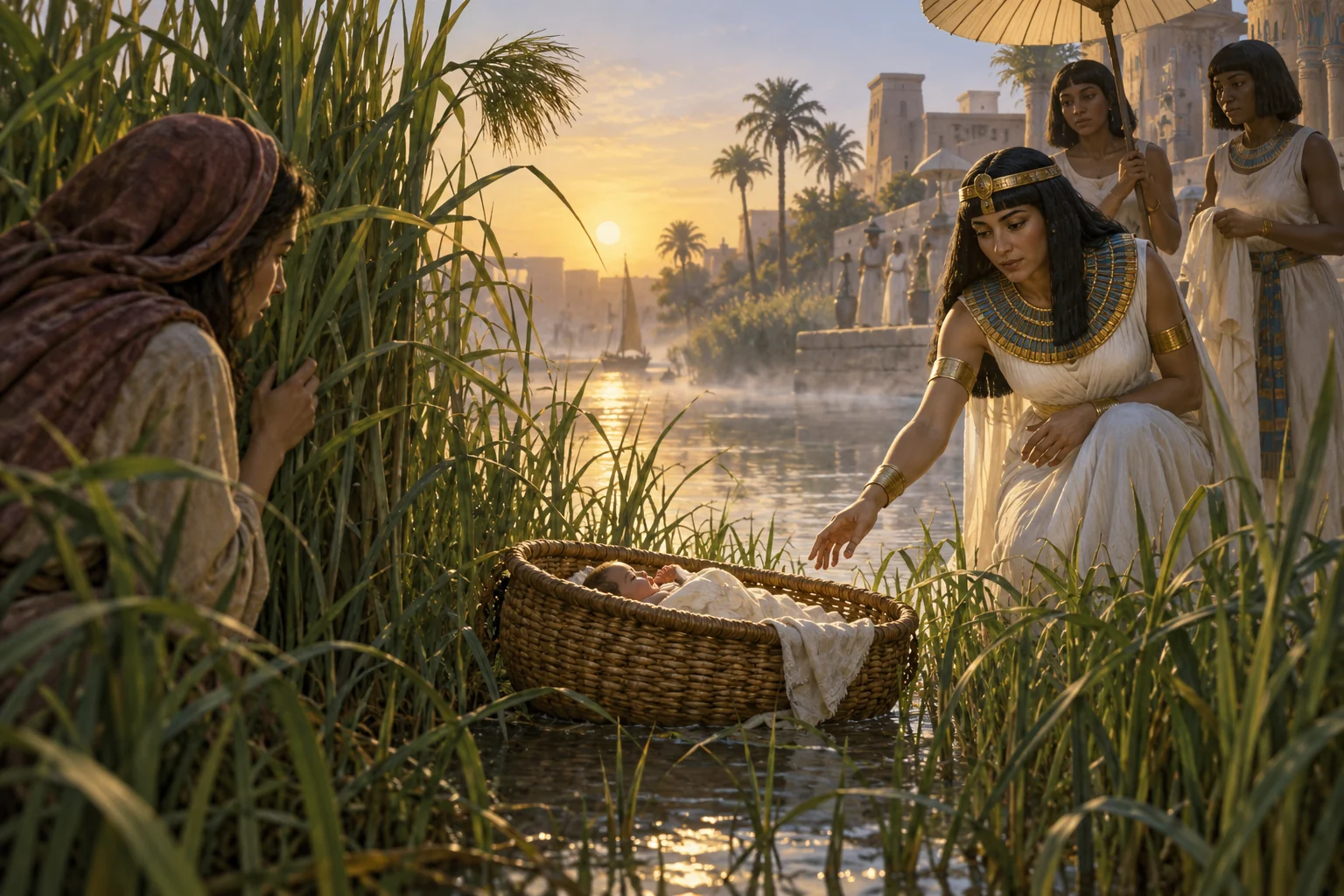
Exodus 2 introduces Moses through a pattern of providential preservation, failed human initiative, exile, and covenantal preparation. His reed basket deliberately echoes Noah’s ark, making his rescue through the Nile a miniature deliverance through waters of death. Pharaoh’s own household preserves and educates the child who will later confront Egypt’s imperial power.
Moses’s killing of the Egyptian exposes zeal without divine commission; flight to Midian strips him of courtly status and places him in obscurity before his calling. The chapter’s decisive actor is ultimately God: he hears Israel’s groaning, remembers the covenant with Abraham, Isaac, and Jacob, sees his people, and knows. Redemption begins in divine fidelity rather than human competence.
Key Claims
- Moses’s basket echoes Noah’s ark. The rare Hebrew term tēvāh links his preservation to deliverance through judgment waters.
- Providence subverts Pharaoh from within. The royal household shelters and finances the deliverer Pharaoh sought to destroy.
- Moses’s first act cannot liberate Israel. Uncommissioned violence leads to rejection and exile rather than covenantal deliverance.
- Midian becomes a place of formation. Moses moves from Egyptian privilege to foreignness, family, and dependence before Yahweh commissions him.
- God’s remembrance is active covenant fidelity. Exodus 2:23–25 grounds the coming exodus in the patriarchal promise.
Interpretive Context
The chapter stands between Pharaoh’s genocidal policy in Exodus 1 and Yahweh’s self-revelation at the burning bush in Exodus 3. Its literary ironies show imperial power unknowingly serving the promise it attempts to extinguish.
Acts 7 and Hebrews 11 reread Moses’s identity and exile within the wider history of faith, while Matthew’s infancy narrative presents Jesus in an exodus-shaped pattern of threatened child, tyrant, Egypt, and deliverance. These appropriations develop rather than replace Israel’s story.
Selected Scholarship
- Childs, B. S. (1974). The Book of Exodus. Westminster Press.
- Durham, J. I. (1987). Exodus. Word Books.
- Kaiser, W. C., Jr. (2008). The Promise-Plan of God. Zondervan.
- Propp, W. H. C. (1999). Exodus 1–18. Doubleday.
- Sarna, N. M. (1991). Exodus. Jewish Publication Society.
Scripture Connections
Exodus 2; Hebrews 11:23–26; Acts 7:20–29; Matthew 2:13–15
Continue on Substack
The complete article remains on Rabbit Room Apologetics at Substack.
Originally published September 10, 2026. This WordPress page is a discovery guide; the complete article is hosted on Substack.