ARTICLE GUIDE
At a Glance
Exodus 5 marks a critical turning point in God’s unfolding promise-plan. Following YHWH’s self-revelation at the burning bush (Exod 3) and Moses’s return to Egypt (Exod 4), the initial diplomatic effort to secure Israel’s release collapses into acute crisis.
Read moreShow less
What This Study Explores
Promise-Plan Theology • Israel and the Nations
Why Does Obedience Initially Make Israel’s Suffering Worse in Exodus 5?
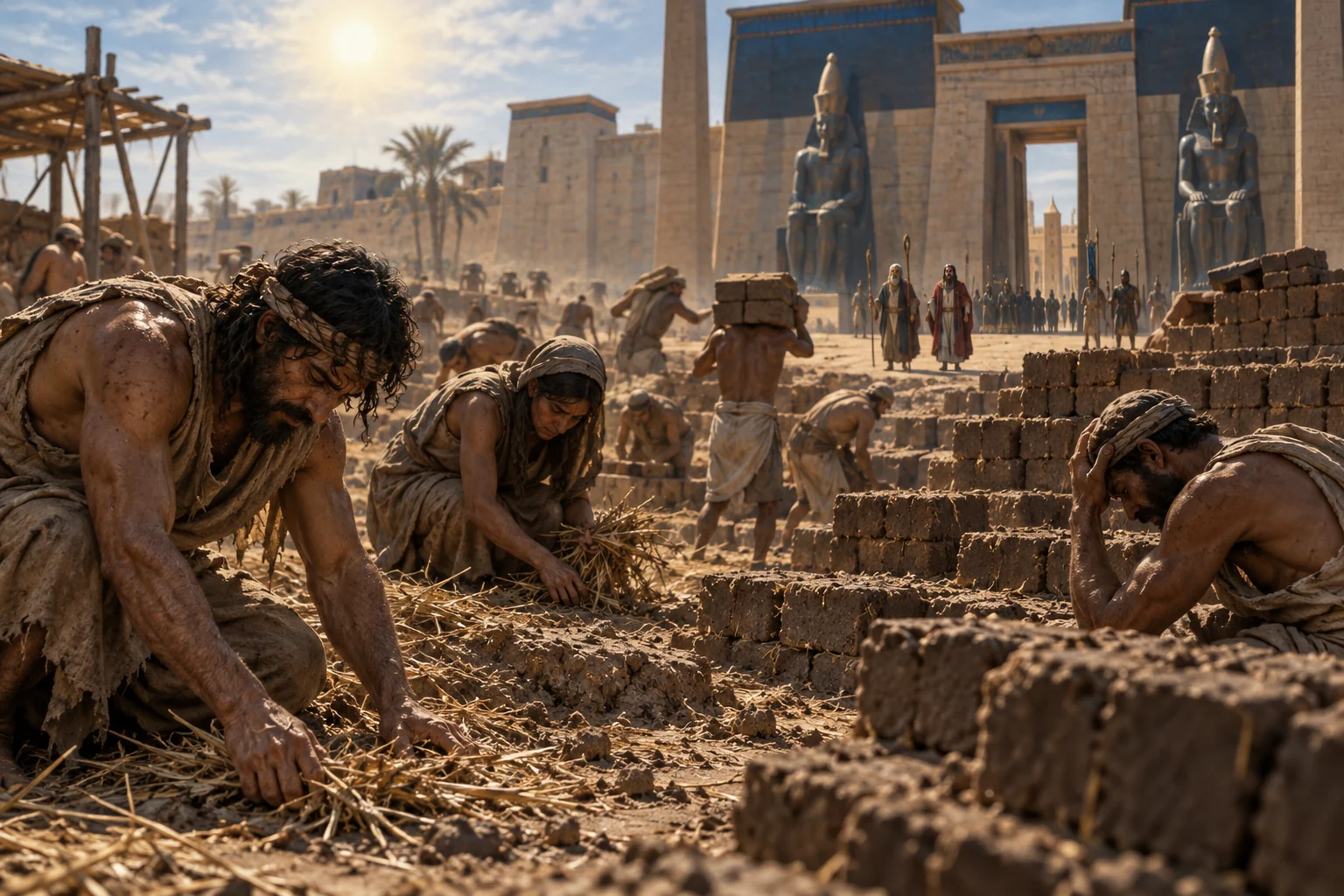
Exodus 5 deliberately records an apparent collapse after Moses and Aaron obey Yahweh. Pharaoh rejects the divine demand, removes the supply of straw, preserves the brick quota, and turns Israel’s foremen against Moses. The setback exposes the brutality of imperial service and strips the people of confidence in quick political relief, but it does not invalidate the covenant promise.
The central conflict concerns whom Israel will serve. Pharaoh treats worship as idleness and intensifies slavery to prevent allegiance to Yahweh. His question—“Who is Yahweh?”—sets the agenda for the plague narrative, which will answer through public judgment and deliverance. Moses’ lament at the chapter’s end is preserved as covenant protest that brings experienced contradiction before God rather than abandoning the promise.
Key Claims
- Obedience can precede intensification. Faithfulness does not guarantee immediate improvement in circumstances.
- Pharaoh contests divine ownership. The struggle is between enforced service to empire and worshipful service to Yahweh.
- Imperial power weaponizes exhaustion. Withholding straw while preserving quotas is calculated to divide Israel and discredit its leaders.
- The “heavy” labor anticipates a heavy heart. Narrative wordplay links oppression with Pharaoh’s growing culpability.
- Lament belongs within faith. Moses voices the contradiction between promise and experience directly to Yahweh.
Interpretive Context
The chapter’s apparent reversal—obedience followed by harsher suffering—functions narratively to expose both Pharaoh’s totalizing claim and Israel’s inability to free itself. Pharaoh is not a rival deity equal to Yahweh; his manipulation of labor, speech, and worship is the historical instrument through which the coming deliverance will reveal whose service truly defines Israel.
The commentary locates Exodus 5 between the successful reception of Moses in Exodus 4 and Yahweh’s renewed self-disclosure in Exodus 6. Egyptian brickmaking practices provide historical background, while the Babel and Divine Warrior horizons locate Pharaoh within the Bible’s larger pattern of imperial rebellion. The narrative’s own emphasis remains covenant, service, knowledge of Yahweh, and the exposure of oppressive power.
Primary Textual Anchors
- Exodus 5:1–5 — Pharaoh’s rejection and the struggle over service.
- Exodus 5:6–14 — straw, quotas, and calculated exhaustion.
- Exodus 5:15–21 — Israelite foremen appeal to Pharaoh and condemn Moses.
- Exodus 5:22–23 — Moses’ covenant lament.
- Genesis 15:13–14; Exodus 4:22–23 — promised judgment and firstborn identity.
Selected Scholarship
- Brevard S. Childs, The Book of Exodus — a major critical and theological commentary on Exodus within the canon.
- Douglas K. Stuart, Exodus — detailed evangelical exegesis of Pharaoh’s oppression and Moses’ appeal.
- Nahum M. Sarna, Exodus — concise Jewish commentary attentive to language, ancient context, and literary movement.
- James K. Hoffmeier, Israel in Egypt — evaluates the Egyptian historical and cultural background of the Exodus traditions.
- William H. C. Propp, Exodus 1–18 — offers detailed philological and historical analysis of Pharaoh’s labor regime and Moses’ protest.
Scripture Connections
Exodus 5; Exodus 5:1–5; Exodus 1:8; Exodus 5:6–14; Exodus 5:15–21; Exodus 5:22–6; Romans 9:17–18; Romans 6:16–18
Continue on Substack
The complete article remains on Rabbit Room Apologetics at Substack.
Originally published September 12, 2026. This WordPress page is a discovery guide; the complete article is hosted on Substack.