ARTICLE GUIDE
At a Glance
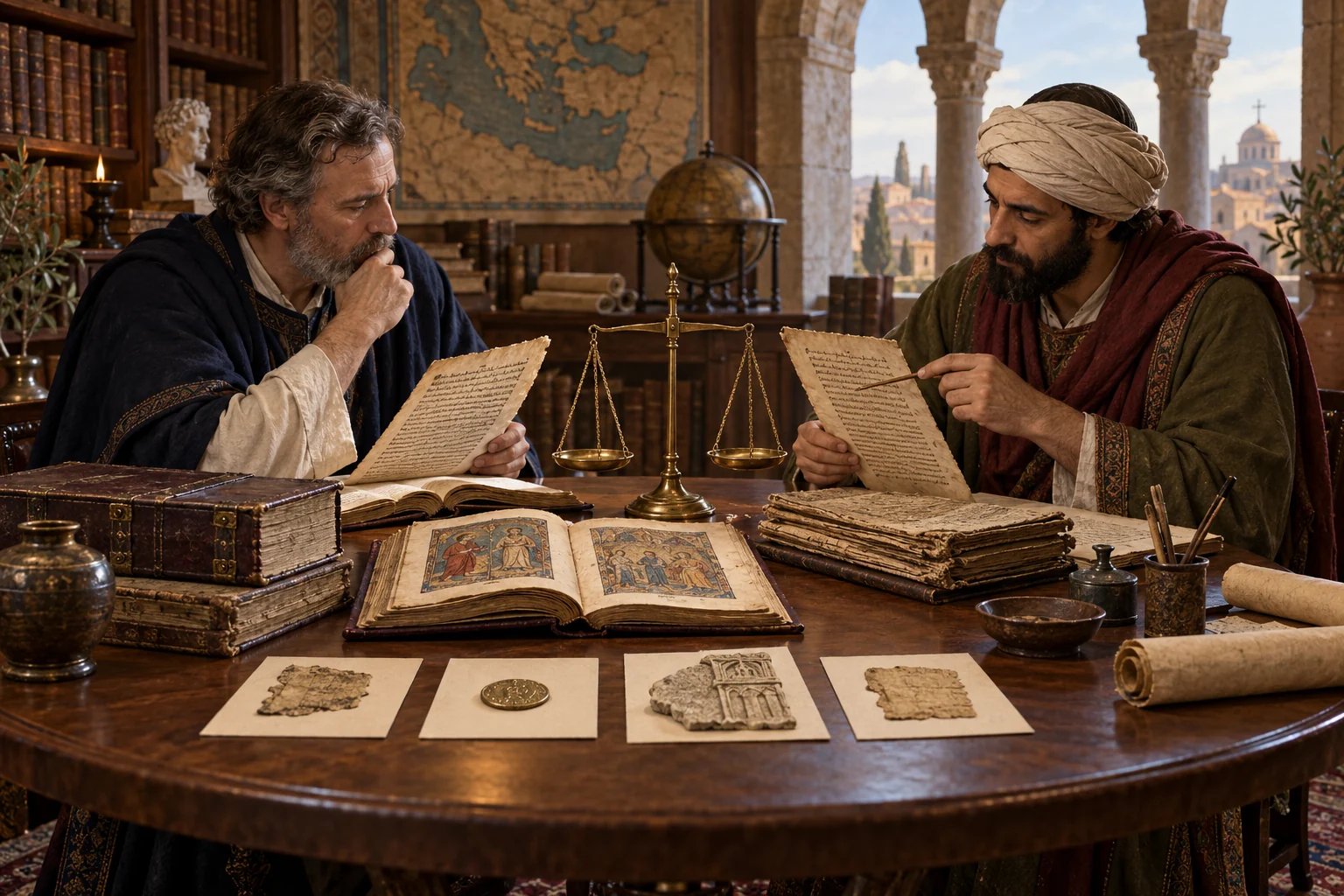
This essay presents a comprehensive academic framework for Christian polemics against Islamic apologetic assertions, organized under Walter C. Kaiser Jr.’s promise-plan biblical theology.
Read moreShow less
What This Study Explores
Promise-Plan Theology • Biblical Theology • Christian–Muslim Polemics • Apologetics
What makes Christian engagement with Islamic apologetics historically responsible and theologically constructive?
Effective polemics tests claims through primary sources, manuscript evidence, historiographical method, and internal coherence while representing Muslim counterarguments fairly. The goal is not ridicule but disciplined comparison of competing accounts of revelation, preservation, prophecy, and Messiah.
The strongest critique distinguishes established evidence from contested revisionism and then offers a positive biblical alternative. Christian confidence should rest in the incarnate Word and God’s cumulative covenantal faithfulness rather than attempting to imitate claims of dictated textual immutability.
Key Claims
- The standard Islamic narrative must be distinguished from the dates and interests of its surviving literary sources.
- Qurʾānic manuscripts and canonical readings require more nuanced language than “one letter, one reading” slogans.
- The Qurʾān’s treatment of prior Scripture creates an internal dilemma for later corruption theories.
- Geographical and revisionist-origin arguments should be used only at the strength warranted by the evidence.
- Christian argument should move from diagnosis to the promise-plan, incarnation, cross, resurrection, and Israel’s enduring calling.
Interpretive Context
Polemics is accountable to truthfulness and neighbor-love. Weak reports, exaggerated manuscript claims, and one-sided source use undermine Christian witness even when the broader critique is defensible.
The promise-plan supplies continuity rather than supersession or abrogation: Genesis, Abraham, Sinai, David, and the new covenant culminate in Israel’s Messiah, into whose olive tree Gentiles are grafted.
Selected Scholarship
- Gabriel Said Reynolds, The Qurʾān and the Bible (2018).
- Robert G. Hoyland, Seeing Islam as Others Saw It (1997).
- Nicolai Sinai, The Qurʾan: A Historical-Critical Introduction (2017).
- Gordon Nickel, Narratives of Tampering (2011).
- Walter C. Kaiser Jr., The Promise-Plan of God (2008).
Scripture Connections
Genesis 3; Romans 11; Genesis 12; Exodus 19; 2 Samuel 7; Jeremiah 31; Ezekiel 36; John 1
Continue on Substack
The complete article remains on Rabbit Room Apologetics at Substack.
Originally published August 25, 2026. This WordPress page is a discovery guide; the complete article is hosted on Substack.