ARTICLE GUIDE
At a Glance
This essay examines the Standard Islamic Narrative of Qurʾānic origins, the life of Muḥammad, and the sacred geography of Mecca under ordinary historical-critical pressure, and then situates the resulting questions within Walter C. Kaiser Jr.’s promise-plan theology.
Read moreShow less
What This Study Explores
Promise-Plan Theology • Christian–Muslim Polemics • Qur’anic Studies
What happens when the traditional story of Islamic origins is subjected to historical scrutiny?
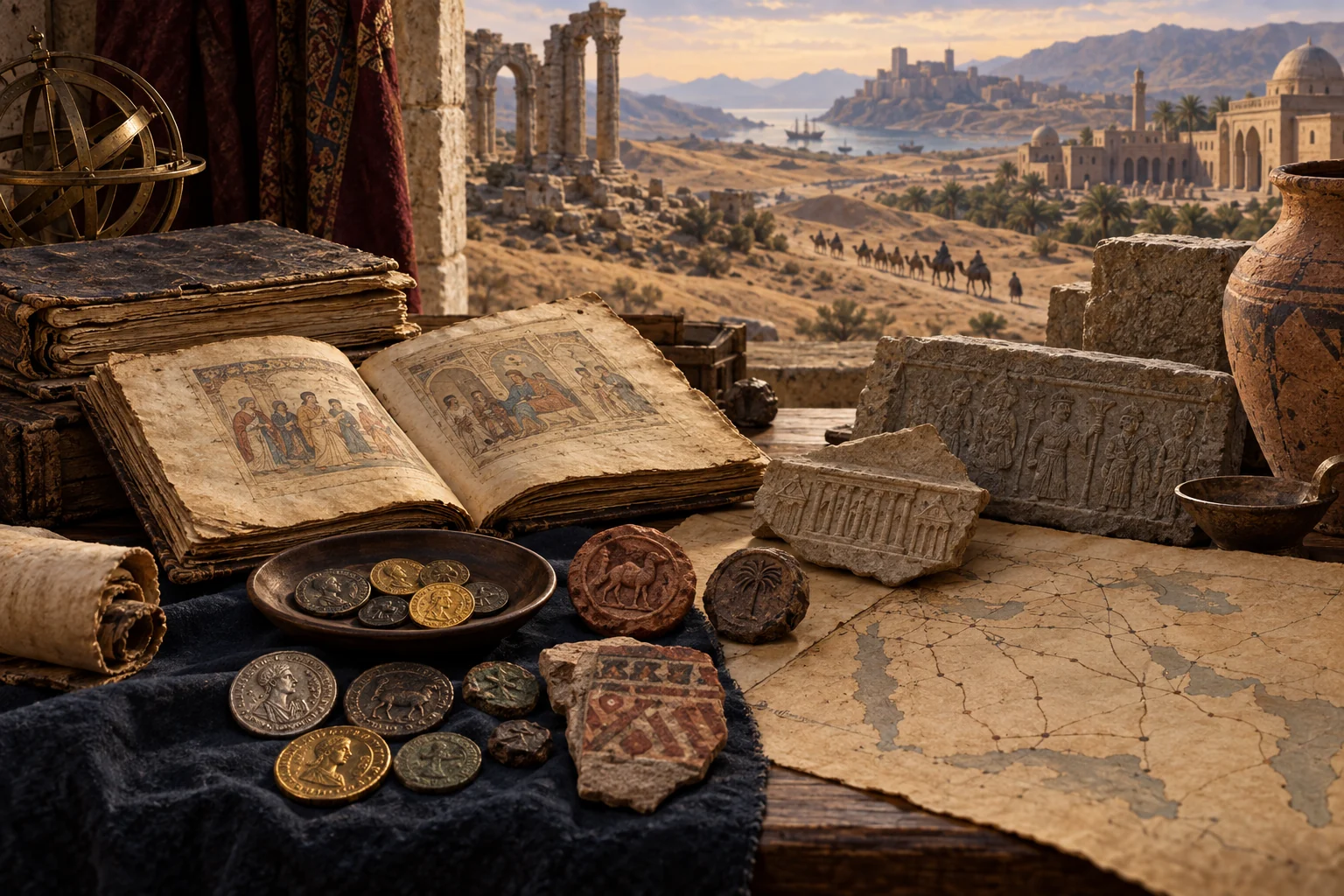
The later narrative can no longer be treated as a transparent transcript of the seventh century. The sīra, ḥadīth, manuscript record, inscriptions, coinage, geography, and non-Muslim witnesses must be compared as distinct bodies of evidence with different dates and interests.
The resulting picture allows an early Arabian prophetic movement and an early Qurʾānic core while questioning the later biography’s precision and the dogma of immediate textual fixity. Critical inquiry should grade claims rather than choose between total orthodoxy and total invention.
Key Claims
- The surviving comprehensive biography is mediated through Ibn Hishām’s recension of the lost Ibn Isḥāq work.
- Canonical tradition collections arise at substantial chronological and geographical distance from the events described.
- Early external witnesses attest conquest and prophetic claims without reproducing the complete standard narrative.
- Coins, inscriptions, and monuments show theological identity developing amid imperial consolidation.
- Codicological evidence records plurality and correction alongside early movement toward standardization.
Interpretive Context
Historical distance is a reason for source criticism, not an automatic verdict of fabrication. More conservative reconstructions and revisionist hypotheses must both be tested against datable evidence.
The theological comparison concerns inlibration and incarnation. The biblical promise-plan locates revelation in covenant history and the Word made flesh, preserving Israel’s story rather than replacing earlier revelation through a final book.
Selected Scholarship
- Robert G. Hoyland, Seeing Islam as Others Saw It (1997).
- Fred M. Donner, Muhammad and the Believers (2010).
- Gregor Schoeler, The Biography of Muhammad (2011).
- Patricia Crone, Meccan Trade and the Rise of Islam (1987).
- Walter C. Kaiser Jr., The Promise-Plan of God (2008).
Scripture Connections
Genesis 3; Jeremiah 31; Ezekiel 36; John 1; Genesis 15; Matthew 5; John 17; Deuteronomy 6
Continue on Substack
The complete article remains on Rabbit Room Apologetics at Substack.
Originally published August 28, 2026. This WordPress page is a discovery guide; the complete article is hosted on Substack.