ARTICLE GUIDE
At a Glance
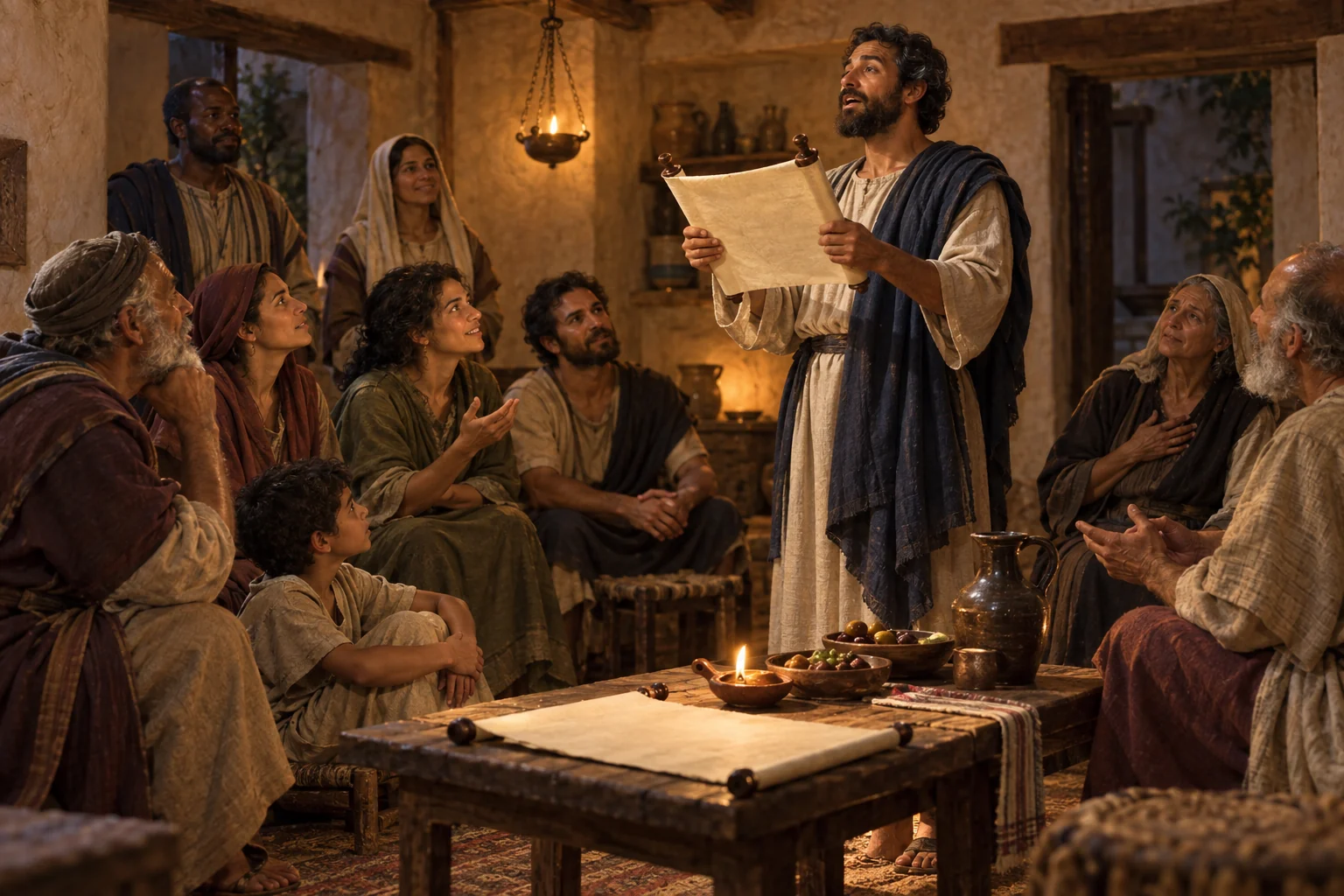
Silent reading of the biblical text on a printed page eliminates the performative, oral, and embodied dimensions that originally characterized its transmission and theological impact. It is a common misconception that the earliest Christians engaged with Scripture in the same manner as contemporary readers, quietly studying bound books in private settings.
Read moreShow less
What This Study Explores
Biblical Theology • Canonical Interpretation • The Promise-Plan of God
Direct Answer: What is lost when Scripture is treated only as silent text on a page?
Readers can lose the Bible’s communal, rhetorical, emotional, and embodied force. Much of Scripture was composed for public hearing, where repetition, rhythm, pacing, gesture, characterization, and audience response carried meaning. Performance criticism helps recover the Gospels as events addressed to communities, not merely information arranged for private study.
This does not diminish the written text; it asks readers to attend more fully to the cues preserved within it. Reading aloud, tracing narrative tension, hearing verbal echoes, and imagining an ancient audience can expose features flattened by modern paragraphing and habitual silent reading.
Key Claims
- Most ancient hearers encountered scriptural texts through communal recitation rather than private ownership and silent study.
- The Gospels’ repetitions, scenes, dialogue, and sound patterns support oral performance and memorability.
- Jesus’ teaching uses prophetic gesture, vivid imagery, hyperbole, reversal, and strategic dissonance to summon response.
- The multilingual environment of Galilee makes knowledge of Greek plausible alongside Aramaic and Hebrew.
- Performance-sensitive reading supplements historical and literary exegesis by asking how a text sounded and acted upon hearers.
Interpretive Context
Claims about the precise language Jesus used require caution. Greek was widespread and Jesus may well have used it in some settings, but a scholarly consensus that Greek was his primary teaching language or that the Gospels preserve his exact Greek wording does not exist. Aramaic remained prominent, and Gospel composition involved memory, translation, and authorial shaping. Literacy estimates likewise vary by location, social group, and definition.
Performance criticism directs attention to the event of hearing: a reader’s voice, the audience’s shared memory, and the Gospel’s patterned speech all participate in interpretation. Reperformance can therefore function as disciplined exegesis when it is constrained by the written text and distinguished from speculative reconstruction of a single original delivery.
Selected Scholarship
- David Rhoads, Joanna Dewey, and Donald Michie, Mark as Story — a foundational narrative and performance-sensitive reading of Mark.
- Whitney Shiner, Proclaiming the Gospel — studies performance and rhetoric in early Christian proclamation.
- Catherine Hezser, Jewish Literacy in Roman Palestine — a major historical study of reading, writing, and literacy conditions.
- Stanley E. Porter, The Criteria for Authenticity in Historical-Jesus Research — includes a substantial argument concerning Jesus and Greek.
- David Seal, Jude: An Oral and Performance Commentary — models how oral delivery, sound, and audience dynamics can inform close interpretation of an early Christian text.
Scripture Connections
Matthew 5:3; Matthew 5:4; Matthew 5:21–48; Matthew 5:13–16; Matthew 6:9–13; Matthew 5; Matthew 5:3–7; Luke 6:20–49
Continue on Substack
The complete article and its available video material remain on Rabbit Room Apologetics at Substack.
Originally published May 2, 2026. This WordPress page is a discovery guide; the complete article is hosted on Substack.