ARTICLE GUIDE
At a Glance
This essay presents the human person as an ensouled body—an embodied unity animated by an immaterial soul—within the organic architecture of God’s promise-plan. Beginning with Genesis 1–2, it traces image-bearing, personal continuity, resurrection, and the restoration of human vocation in the renewed cosmic temple.
Read moreShow less
What This Study Explores
Promise-Plan Theology • Theological Anthropology
Direct Answer: What best accounts for embodied human identity across death and resurrection?
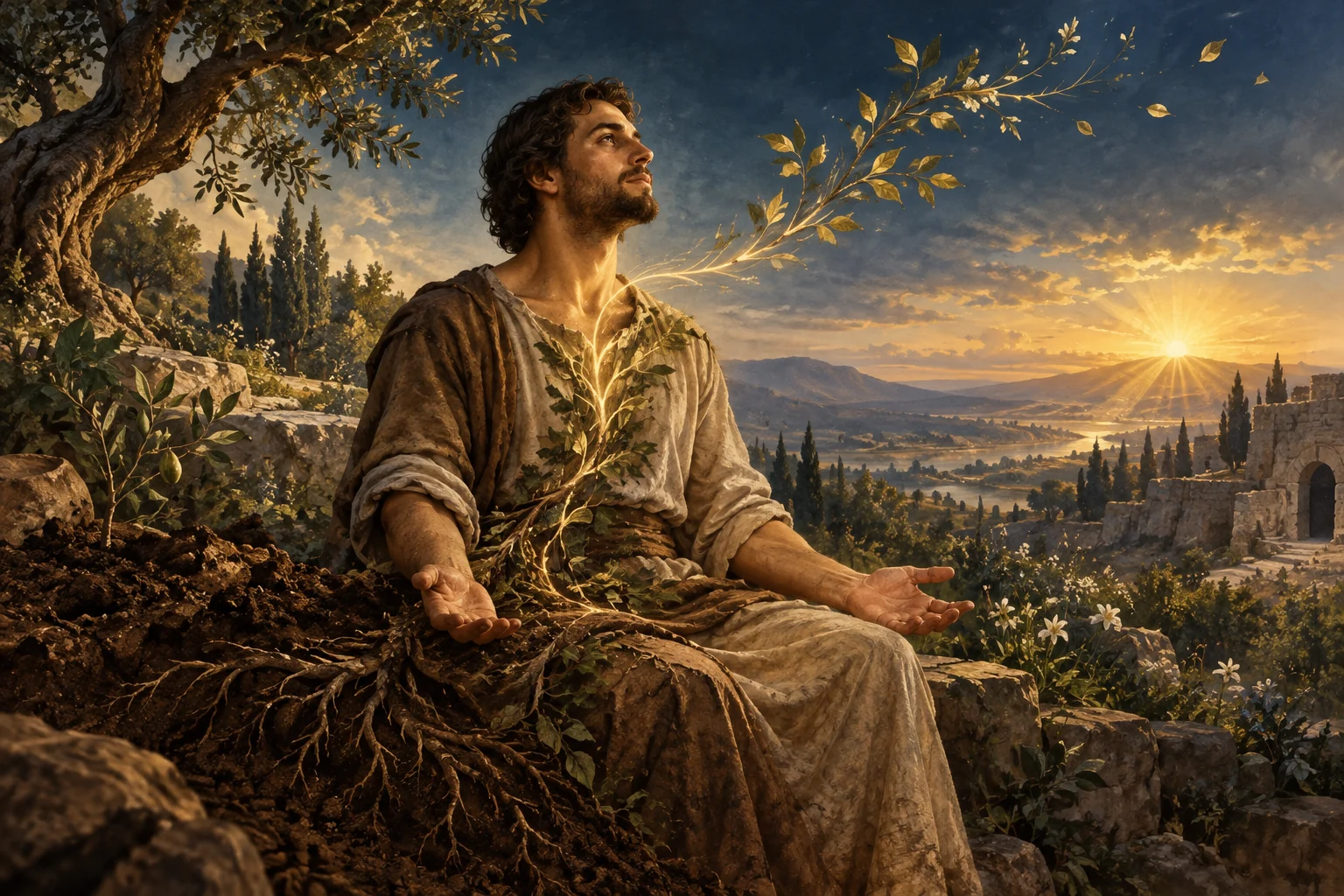
The ensouled-image account holds together two biblical affirmations that reductionist models tend to separate: human beings are genuinely embodied creatures, and personal identity is not exhausted by present biological function. Genesis presents the human as dust animated by God’s life-giving breath and commissioned as God’s royal-priestly image within creation.
On this reading, the soul is not the “real person” trapped inside a disposable body. It grounds personal continuity through death while the resurrection remains necessary for restored, fully human life. Human dignity therefore rests in God’s gift and vocation, not in fluctuating capacities such as cognition, independence, or social usefulness.
Key Claims
- Biblical anthropology treats the human person as an integrated, embodied unity rather than a mind temporarily housed in matter.
- The image of God is an endowed identity and royal-priestly vocation, not merely a checklist of mental abilities.
- An immaterial dimension of personhood can explain personal continuity through the intermediate state without devaluing the body.
- Resurrection, rather than escape from embodiment, is the promised completion of human redemption.
- Because image-bearing is given by God, human worth does not rise or fall with functional capacity.
Interpretive Context
The Hebrew term nephesh ordinarily refers to the living person and should not be treated as a simple equivalent of a detachable Greek soul. Yet that lexical point does not by itself settle every metaphysical question. Christian thinkers continue to debate substance dualism, holistic dualism, hylomorphism, and nonreductive physicalism. The decisive tests are whether a model preserves embodied creatureliness, personal continuity through death, and the indispensability of bodily resurrection.
The intermediate state is therefore real but provisional: conscious personal continuity after death does not replace the body or constitute the final Christian hope. The promise-plan reaches its anthropological goal in resurrection, when embodied persons are renewed for royal-priestly life in God’s restored creation, safeguarding dignity through disability, cognitive decline, and death.
Selected Scholarship
- Joshua R. Farris, The Soul of Theological Anthropology — a contemporary defense of the soul’s importance for personal identity and Christian doctrine.
- John W. Cooper, Body, Soul, and Life Everlasting — a biblical and philosophical case for holistic dualism and the intermediate state.
- Joel B. Green, Body, Soul, and Human Life — a major nonreductive physicalist alternative that sharpens the debate.
- J. Richard Middleton, The Liberating Image — a study of the image of God as humanity’s royal vocation in creation.
- Carmen Joy Imes, Being God’s Image — embodied status, vocation, and the enduring dignity of human image-bearers.
Scripture Connections
Genesis 1; Genesis 2:7; Isaiah 42:5; Luke 1:46; Luke 23:46; Acts 7:59; Ecclesiastes 12:7; Genesis 3
Continue on Substack
The complete article and its available video material remain on Rabbit Room Apologetics at Substack.
Originally published May 26, 2026. This WordPress page is a discovery guide; the complete article is hosted on Substack.