TOPIC HUB
Islamic Textual History
Examine manuscripts, rasm, variant readings, compilation traditions, and the historical development of the Qur’anic text.

Questions This Hub Explores
- What do the earliest manuscripts actually establish?
- How do rasm, vocalization, and canonical readings relate?
- How should traditional compilation narratives be historically assessed?
FOUNDATIONAL STARTING POINTS
Begin with These Studies
August 18, 2026
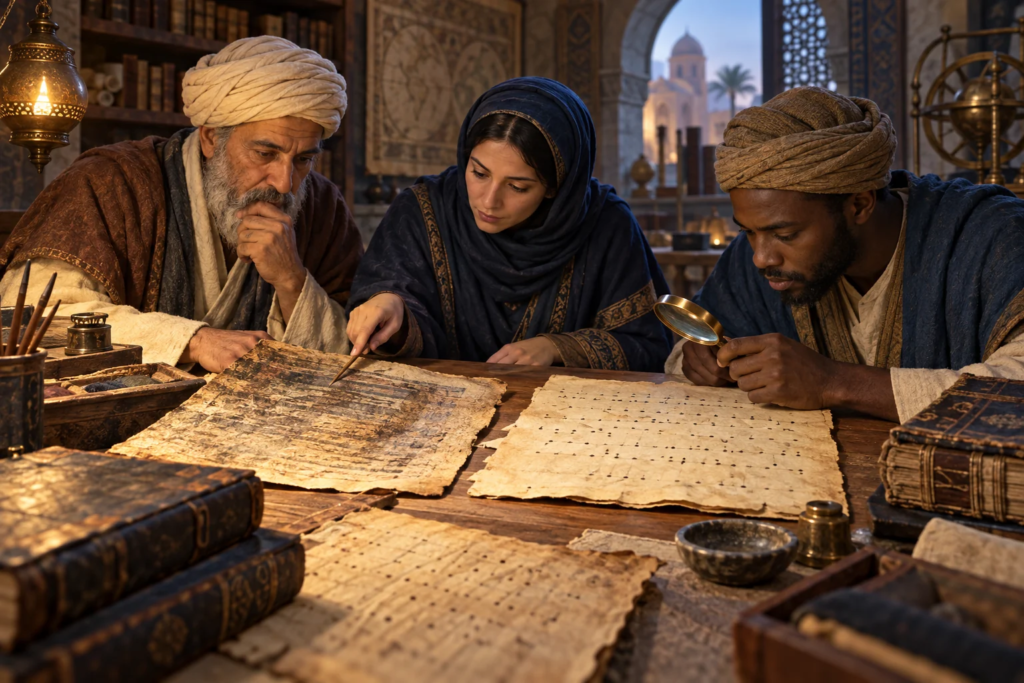
The Quranic Preservation Debate: Manuscript Evidence, Historical Critique, and the Promise-Plan of Divine Revelation
This essay offers a historical-critical examination of the traditional claim that the Qurʾan has been preserved letter for letter from the seventh century to the present. Drawing on paleography, codicology,…
Open article guide →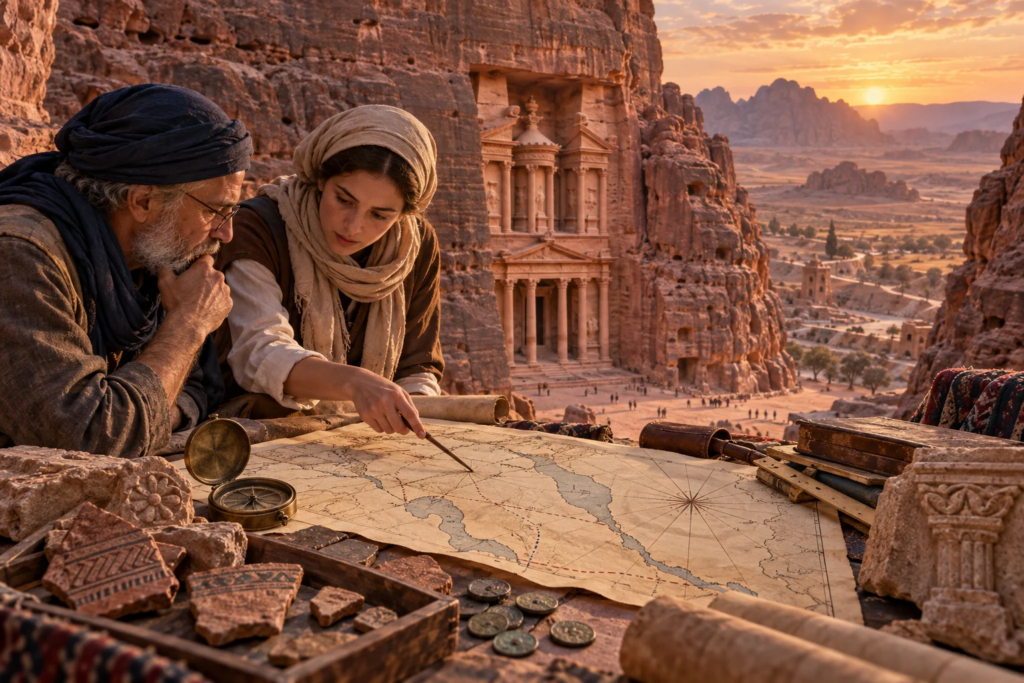
August 22, 2026
The Petra Genesis and the Revisionist Revision of Islamic Origins: A Historical-Critical and Biblical-Theological Appraisal
This essay examines historical-critical challenges to the Standard Islamic Narrative S.I.N.) regarding the origins of Islam, focusing on geographical, archaeological, and textual arguments that situate early Islamic sanctuaries in northern…
Open article guide →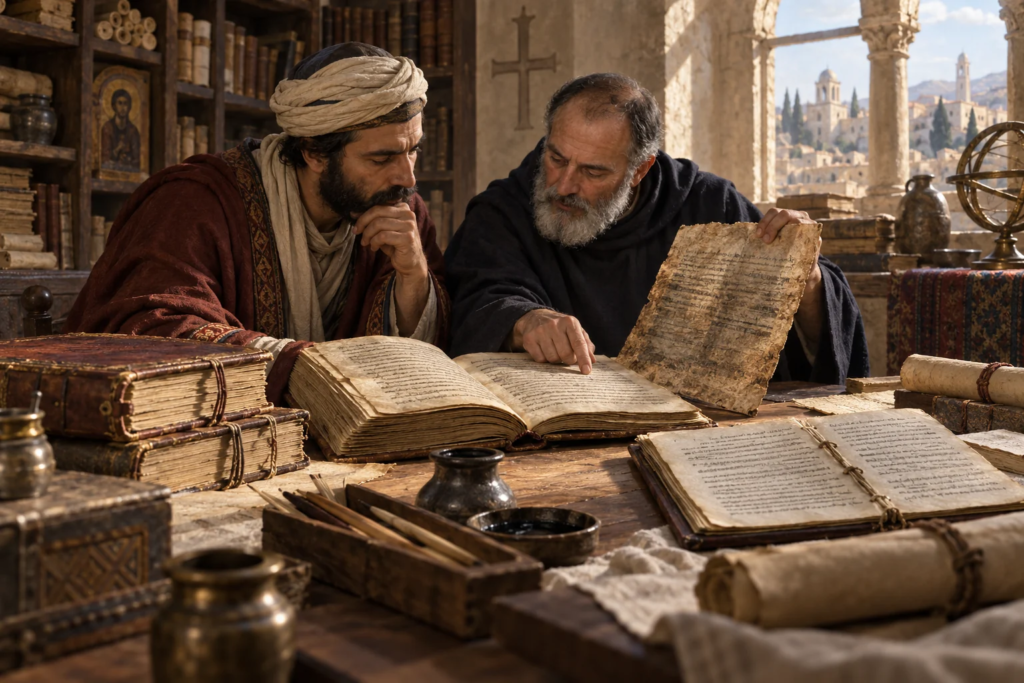
August 23, 2026
Linguistic Paradoxes, Textual Philology, and the Origins of the Qurʾān: A Historical-Critical and Biblical-Theological Assessment
The Standard Islamic Narrative asserts that the Qurʾān was revealed verbatim in the seventh-century Meccan dialect of the Quraysh, standardized under Caliph ʿUthmān ibn ʿAffān, and preserved with letterperfect uniformity.
Open article guide →CONTINUE EXPLORING
Newest Article Guides

September 12, 2026
The Scriptural and Historical Continuum
This essay evaluates the Qurʾān’s own defense of prior Abrahamic Scripture against later Islamic charges of wholesale textual corruption (taḥrīf al-lafẓ) and against the dogma of letter-perfect inlibration.
Open article guide →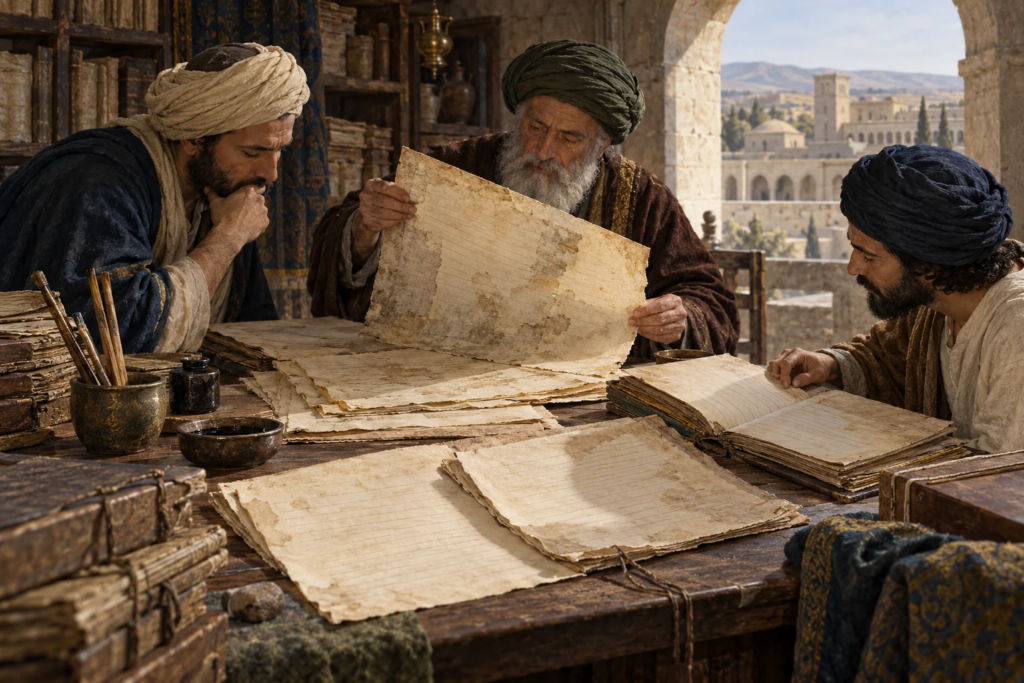
September 10, 2026
The Imperial Compilation and the Syro-Aramaic Subtext
The Imperial Compilation and the Syro-Aramaic Subtext The Standard Islamic Narrative asserts that the Qurʾān was revealed verbatim in the seventh-century Meccan dialect of the Quraysh, standardized under Caliph ʿUthmān…
Open article guide →
September 8, 2026
The Syro-Aramaic Subtext and Philological Architecture of the Qurʾān
This essay offers a historical-critical and biblical-theological assessment of the Qurʾān’s linguistic, intertextual, and manuscript profile. Classical Islamic orthodoxy presents the text as a verbatim Arabic dictation, preserved letter-perfect from…
Open article guide →
September 2, 2026
Inventing Muhammad and the Failure of Inlibration: A Biblical-Theological and Historical-Critical Appraisal of Early Islamic Origins
This essay offers a biblical-theological and historical-critical appraisal of the origins of early Islam. It reads the late compilation of sīra and ḥadīth against the Islamic dogma of inlibration—the uncreated…
Open article guide →August 23, 2026
Linguistic Paradoxes, Textual Philology, and the Origins of the Qurʾān: A Historical-Critical and Biblical-Theological Assessment
The Standard Islamic Narrative asserts that the Qurʾān was revealed verbatim in the seventh-century Meccan dialect of the Quraysh, standardized under Caliph ʿUthmān ibn ʿAffān, and preserved with letterperfect uniformity.
Open article guide →August 22, 2026
The Petra Genesis and the Revisionist Revision of Islamic Origins: A Historical-Critical and Biblical-Theological Appraisal
This essay examines historical-critical challenges to the Standard Islamic Narrative S.I.N.) regarding the origins of Islam, focusing on geographical, archaeological, and textual arguments that situate early Islamic sanctuaries in northern…
Open article guide →August 18, 2026
The Quranic Preservation Debate: Manuscript Evidence, Historical Critique, and the Promise-Plan of Divine Revelation
This essay offers a historical-critical examination of the traditional claim that the Qurʾan has been preserved letter for letter from the seventh century to the present. Drawing on paleography, codicology,…
Open article guide →