ARTICLE GUIDE
At a Glance
The interpretation of Paul’s Epistle to the Romans has long served as a central battleground for competing theological frameworks. Western scholasticism and classical Protestant traditions have frequently imposed post-biblical Hellenistic philosophical categories onto Paul’s writings, severing him from his native Jewish matrix.
Read moreShow less
What This Study Explores
Promise-Plan Theology • Kingdom Ethics • Pauline Studies
Direct Answer: How does Romans 14–15 use table fellowship to define covenantal unity?
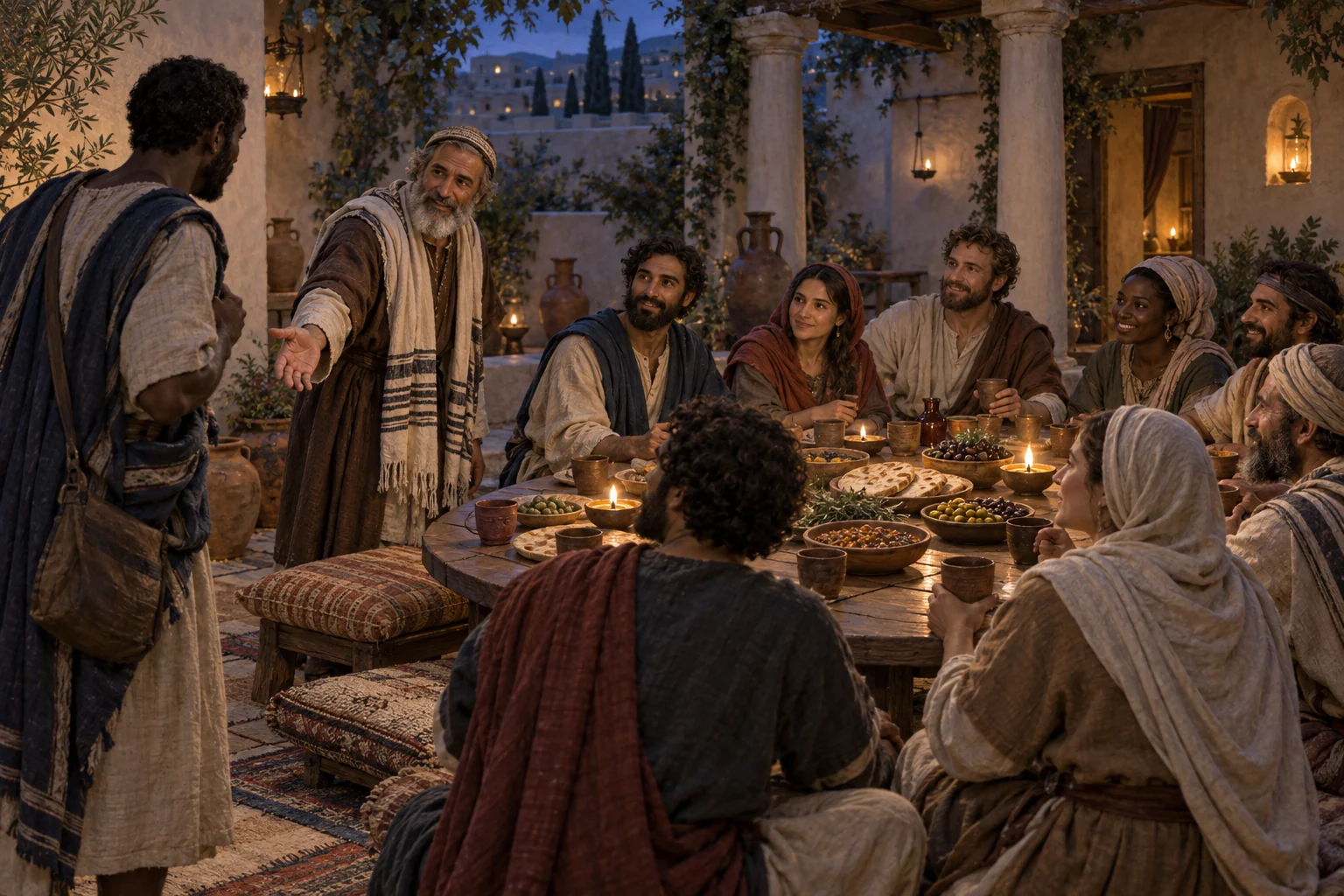
Paul does not solve the dispute by erasing Jewish identity or by requiring Gentiles to become Jews. He directs both groups to receive one another because Messiah has received them, making the shared table a practical test of allegiance, conscience, and love.
The strong are therefore called to limit liberty when its exercise wounds another’s covenantal conscience, while the weak are forbidden to judge those whom God has welcomed. Unity is neither sameness nor indifference; it is Spirit-formed mutual service within the one people of Israel’s Messiah.
Key Claims
- Romans 14–15 addresses contested practices involving food, days, conscience, and communal belonging.
- Paul’s categories of weak and strong are pastoral descriptions, not rankings of human worth or spiritual sincerity.
- Neither contempt nor judgment is permitted because every servant answers to the same Lord.
- Love may require voluntary restraint where legitimate freedom would destroy or exclude another believer.
- Paul grounds Jew-Gentile fellowship in Israel’s Scriptures and Messiah’s welcome rather than in supersessionist uniformity.
Interpretive Context
Scholars disagree over whether the food dispute centers on Torah observance, vegetarian asceticism, marketplace impurity, or overlapping concerns. Paul’s statement that nothing is unclean in itself must be read alongside his concern for conscience, Jewish identity, and the specific Roman setting; it should not be made to carry every later debate about Torah. The passage protects differentiated identities while refusing any practice that turns difference into exclusion from Messiah’s table.
Paul’s appeal to Isaiah, Torah, and the praise of God among the nations places table ethics inside the promise to Abraham rather than generic tolerance. Mutual welcome becomes an eschatological sign: Jews and Gentiles remain distinguishable participants who glorify Israel’s God together, refusing both coercive assimilation and segregated fellowship.
Selected Scholarship
- Mark D. Nanos, The Mystery of Romans — a Jewish-contextual reading of the Roman assemblies and their tensions.
- J. Brian Tucker, Reading Romans after Supersessionism — social identity and non-supersessionist interpretation.
- James D. G. Dunn, Romans 9–16 — detailed exegesis of the weak, the strong, and communal ethics.
- Robert Jewett, Romans — historical reconstruction of Roman house churches and Paul’s rhetoric of mutual welcome.
- Walter C. Kaiser Jr., The Promise-Plan of God (2008).
Scripture Connections
Romans 14; Acts 18:2; Romans 14:14; Mark 7:19; Acts 10; Leviticus 11; Romans 9; Genesis 3
Continue on Substack
The complete article and its available video material remain on Rabbit Room Apologetics at Substack.
Originally published June 4, 2026. This WordPress page is a discovery guide; the complete article is hosted on Substack.