ARTICLE GUIDE
At a Glance
Western Christian theology has long engaged the question of human identity, frequently under the influence of post-biblical philosophical systems. Greek metaphysics and Enlightenment rationalism have introduced external categories that obscure the organic and supernatural dimensions of the biblical witness.
Read moreShow less
What This Study Explores
Imago Dei • Cosmic Temple
Direct Answer: What does it mean for embodied humans to bear God’s image in a cosmic temple?
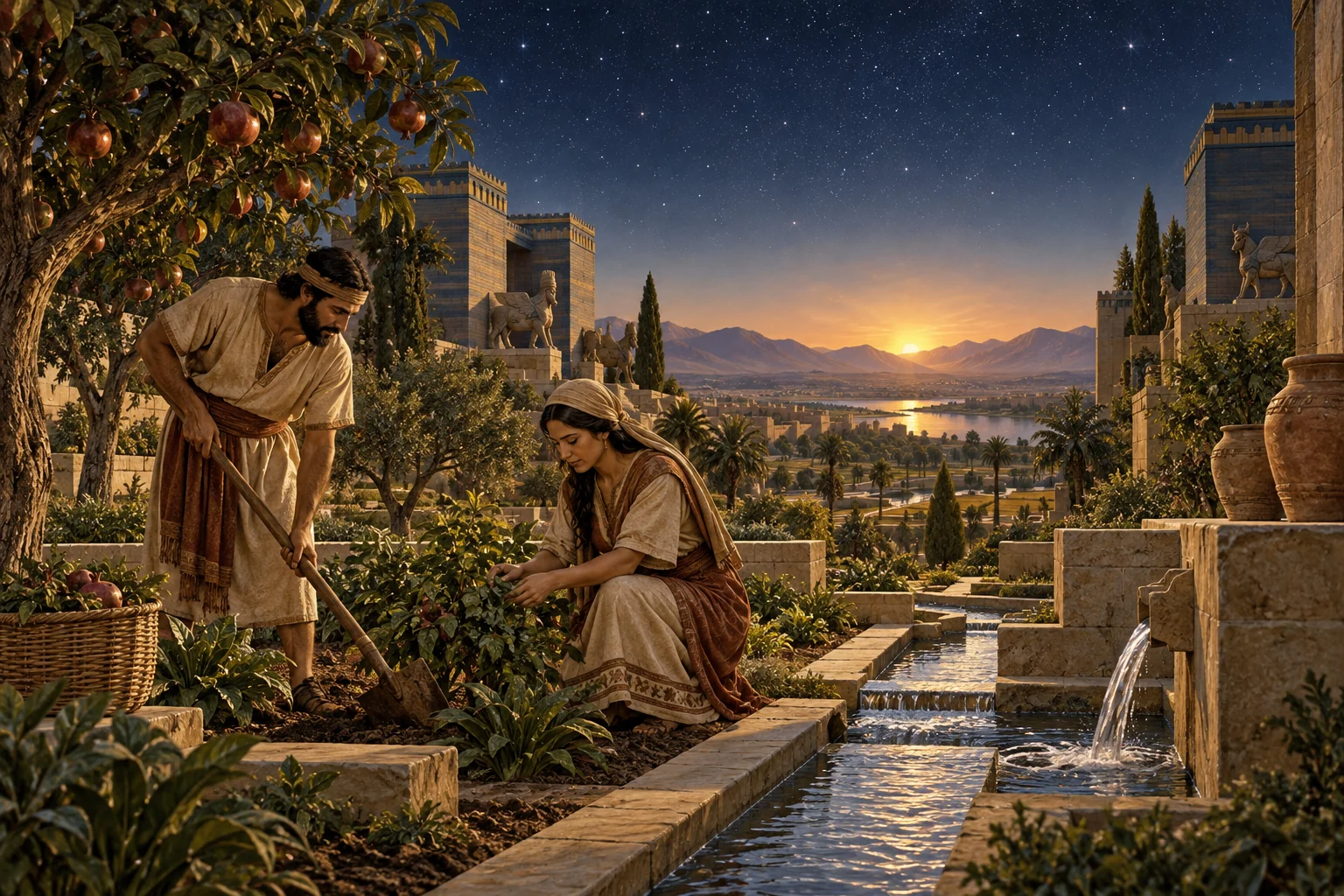
It means every human receives a royal-priestly identity as God’s living representative within creation. The image is not earned through intellect, autonomy, productivity, or spiritual achievement; it is bestowed on male and female humanity by divine decree.
Within the temple reading of creation, image-bearers are commissioned to extend wise stewardship and sacred order. Rebellion corrupts that vocation without erasing human dignity, and Christ restores the image toward its intended embodied and communal fulfillment.
Key Claims
- Genesis democratizes royal image language by applying it to humanity rather than only to kings.
- God’s seventh-day rest signifies enthroned rule in the ordered creation, not inactivity.
- Human dominion is accountable representation and cultivation, not exploitative autonomy.
- The image persists after the fall and grounds the worth of people regardless of capacity or condition.
- Christ is the true image and the pattern through whom human vocation and creation are renewed.
Interpretive Context
Functional-temple readings clarify Genesis’s ancient context, but functional ordering need not deny God’s material creation. Likewise, calling the image an ontological status highlights permanence without requiring a detachable substance; identity and vocation remain inseparably embodied and relational.
Treating the image as bestowed status protects the dignity of infants, people with profound disabilities, and anyone whose capacities are diminished. The vocational dimension then describes how image-bearing is expressed—not how it is acquired—while Christ reveals both God’s character and the genuinely human rule toward which embodied persons and communities are being renewed.
Selected Scholarship
- J. Richard Middleton, The Liberating Image (2005).
- Carmen Joy Imes, Being God’s Image (2023).
- John H. Walton, The Lost World of Genesis One (2009).
- G. K. Beale, The Temple and the Church’s Mission (2004).
- Walter C. Kaiser Jr., The Promise-Plan of God (2008).
Scripture Connections
Genesis 1; Genesis 3; Genesis 6; Genesis 11; Deuteronomy 32; Isaiah 45; Psalm 51; Jeremiah 4
Continue on Substack
The complete article remains on Rabbit Room Apologetics at Substack.
Originally published June 20, 2026. This WordPress page is a discovery guide; the complete article is hosted on Substack.