ARTICLE GUIDE
At a Glance
For centuries, many dominant trajectories within Western systematic theology have interpreted the Apostle Paul’s soteriology through post-biblical juridical and mechanical frameworks, such as Anselmian satisfaction and certain formulations of Reformed penal substitution.
Read moreShow less
What This Study Explores
Pauline Studies
Direct Answer: Does Paul explain the cross as a mechanical payment detached from Israel’s covenant story?
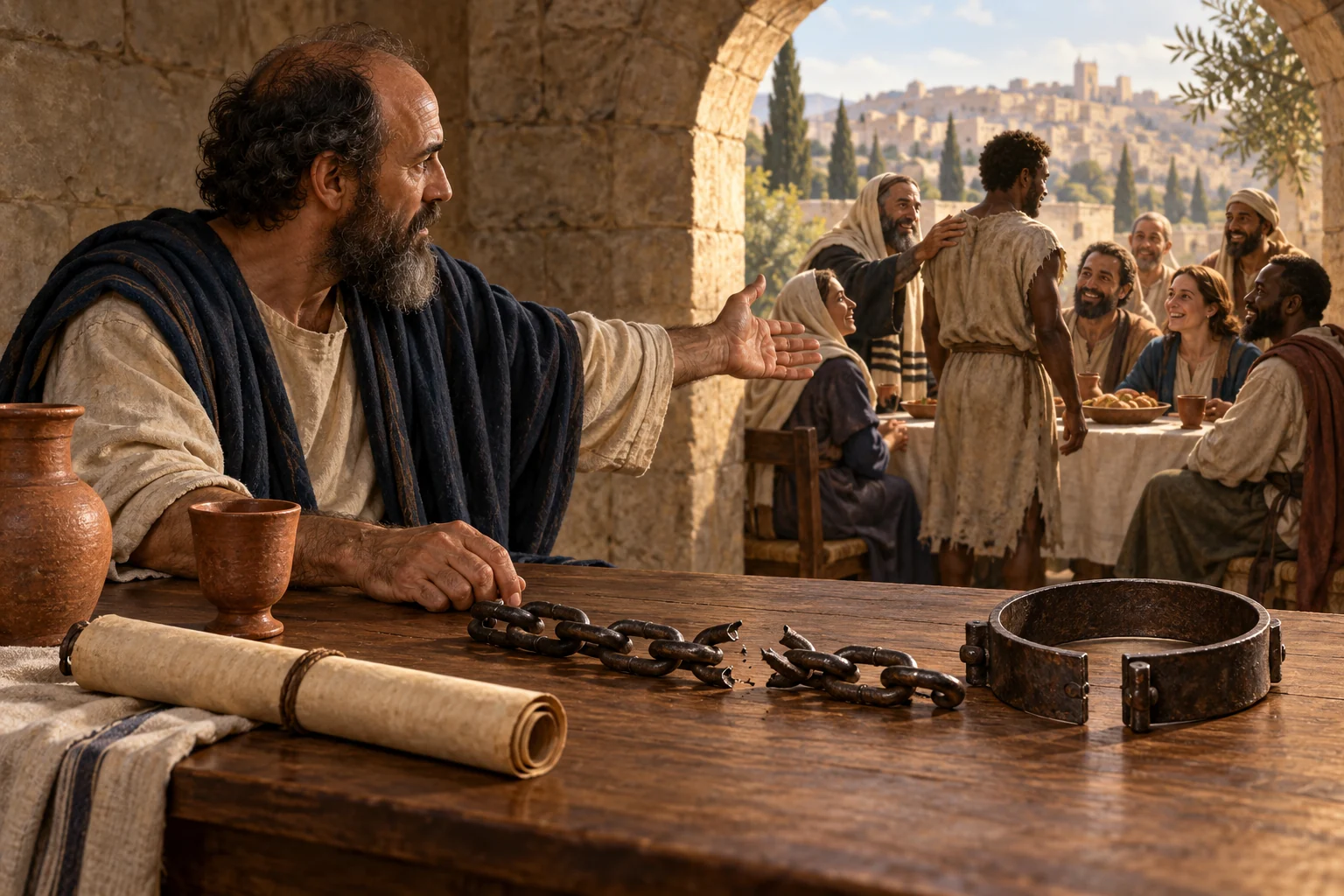
No. Paul’s compressed expressions—Christ died “for us,” redemption, sacrifice, and curse-bearing—presuppose the story of Israel, the ministry of Jesus, and the formation of a renewed covenant people. Their meaning is narrative and relational before it is reduced to a later theory of atonement.
This does not require abandoning substitution, judgment, or cultic imagery. It requires reading those motifs together within the promise-plan: Jesus bears the costly consequences of faithful obedience and sin’s condemnation in order to reconcile Jews and Gentiles to God and one another.
How Should Paul’s Covenant Narrative Shape an Account of Redemption?
Paul presents redemption as the climax of Israel’s covenant story: the Messiah faithfully embodies Israel’s vocation, bears the consequences of sin, defeats the enslaving powers, and creates a Spirit-formed people from Israel and the nations. Participation in Christ is therefore essential, because believers are incorporated into his death, resurrection, and renewed life rather than receiving an abstract benefit detached from his story.
Narrative participation, however, does not eliminate representation, substitution, or divine judgment. Paul’s language of curse, condemnation, sacrifice, ransom, and the mercy seat must be interpreted together with the prepositions used for Christ’s death. The cost of redemption is the Messiah’s covenantally representative self-offering, whose forensic and participatory dimensions converge within the promise-plan.
Key Claims
- Paul’s letters use compressed soteriological formulas that presuppose prior oral instruction and a shared narrative.
- The Greek hyper ordinarily means “for” or “on behalf of” and does not by itself specify a complete mechanism of atonement.
- Sacrificial, forensic, representative, participatory, and victory motifs should not be collapsed into a single commercial model.
- Brondos helpfully restores the historical mission of Jesus but risks understating objective dimensions of sin-bearing and divine judgment.
- Promise-plan theology locates the cross within Israel’s story and preserves God’s continuing commitments to ethnic Israel.
Interpretive Context
The article is a critical engagement with David A. Brondos rather than an unqualified adoption of his reconstruction. It challenges theories that detach Paul’s language from first-century Jewish narrative while retaining the canonical force of texts such as Romans 3:25, Romans 8:3–4, and Galatians 3:13.
Brondos rightly restores the narrative and participatory dimensions of Paul’s gospel, especially the Messiah’s faithful obedience and the incorporation of believers into his death and life. Yet the semantic range of hyper cannot by itself exclude representative substitution, and Paul’s use of sacrifice, curse, condemnation, and hilastērion must remain integrated with covenant participation. A promise-plan reading holds together Israel’s vocation, messianic representation, forensic judgment, resurrection, and Gentile inclusion without reducing redemption to either abstract transaction or moral example.
Selected Scholarship
- David A. Brondos, Paul on the Cross: Reconstructing the Apostle’s Story of Redemption (2006).
- Richard B. Hays, The Faith of Jesus Christ, 2nd ed. (2002).
- N. T. Wright, Paul and the Faithfulness of God (2013).
- Michael J. Gorman, Apostle of the Crucified Lord, 2nd ed. (2017).
- David M. Moffitt, Rethinking the Atonement: New Perspectives on Jesus’s Death, Resurrection, and Ascension (2022).
Scripture Connections
Romans 3:25; Romans 8:3–4; Romans 8:3; Galatians 3:13; 1 Corinthians 6:20; Isaiah 53; Romans 11:17–29; 2 Corinthians 5:21
Continue on Substack
The complete article remains on Rabbit Room Apologetics at Substack.
Originally published July 30, 2026. This WordPress page is a discovery guide; the complete article is hosted on Substack.