ARTICLE GUIDE
At a Glance
Exodus 13 joins firstborn consecration, covenant memory, substitutionary redemption, Joseph’s bones, and Yahweh’s guiding presence within Israel’s departure from Egypt.
What This Study Explores
This commentary examines the consecration and redemption of the firstborn, the Feast of Unleavened Bread, intergenerational remembrance, Israel’s wilderness route, Joseph’s bones, the pillar of cloud and fire, and the chapter’s place in the promise-plan.
Why Does Redemption in Exodus 13 Produce Consecration?
Exodus 13 presents Israel’s liberation as a transfer of allegiance rather than autonomous freedom. Because Yahweh spared Israel’s firstborn through substitutionary blood, the firstborn belong to him. Grace precedes obligation: deliverance is grounded in the promise to Abraham, while consecration and remembrance shape the life of the people already redeemed.
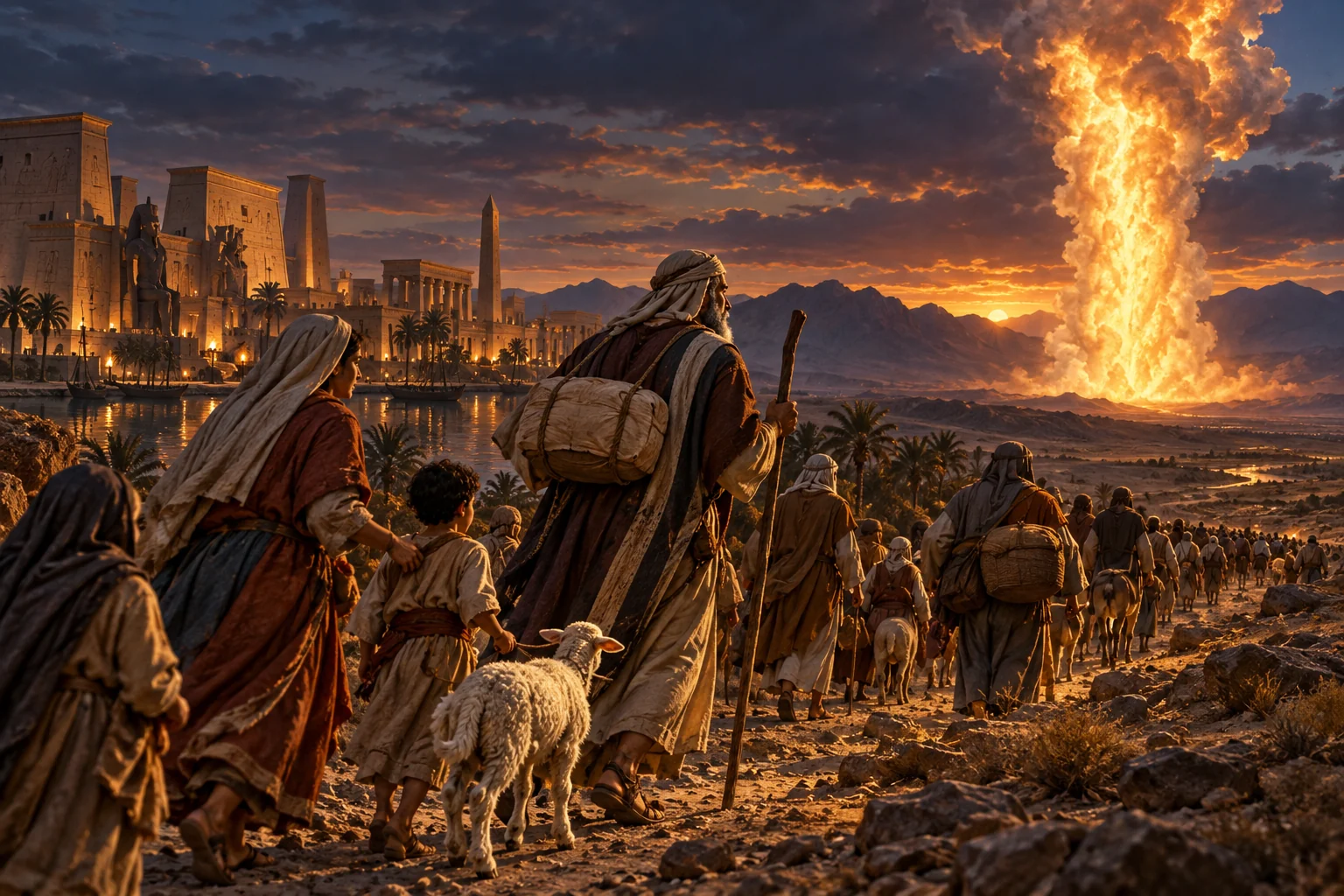
The same chapter binds memory to movement. Unleavened bread teaches households to narrate the exodus across generations; Joseph’s bones connect the departure to a centuries-old oath; and the cloud and fire show that the God who redeems also remains present to guide. The New Testament receives these patterns organically in Messiah without erasing Israel’s historical rescue or continuing vocation.
Key Claims
- Redemption establishes divine ownership. Israel’s firstborn are consecrated because Yahweh preserved them in the Passover judgment.
- Substitution protects life. The lamb that redeems the donkey illustrates a canonical ransom pattern extended to human firstborn.
- Covenant memory is intergenerational. The feast turns the exodus into a repeated household confession governing thought and action.
- Joseph’s bones testify to promise-plan continuity. Israel’s departure fulfills the patriarchal expectation that God would visit his people.
- Divine presence determines Israel’s route. Cloud and fire reveal guidance, protection, and throne-glory in the wilderness.
Interpretive Context
The chapter combines ritual instruction and historical narrative. The “sign” on hand and memorial between the eyes first communicates comprehensive allegiance, even as later Jewish practice embodied the language through phylacteries. The firstborn legislation likewise arises from Passover history rather than from an abstract sacrificial theory.
Christological appropriation should preserve that historical grounding. Luke places Jesus under Exodus 13’s firstborn law; Paul draws on unleavened bread, redemption, and the wilderness cloud; and Hebrews and Colossians develop firstborn themes. Fulfillment intensifies Israel’s Scriptures rather than rendering Israel disposable.
Selected Scholarship
- Propp, W. H. C. (1999–2006). Exodus 1–18 and Exodus 19–40.
- Sarna, N. M. (1991). Exodus.
- Durham, J. I. (1987). Exodus.
- Dozeman, T. B. (2009). Commentary on Exodus.
- Kaiser, W. C., Jr. (2008). The Promise-Plan of God.
Scripture Connections
Genesis 15:13–14; 50:24–25; Exodus 4:22–23; 12:1–51; 13:1–22; 19:5–6; Luke 2:22–24; 1 Corinthians 5:6–8; 10:1–4; Galatians 4:4–5; Colossians 1:15–18; Hebrews 1:6
Continue on Substack
The complete article remains on Rabbit Room Apologetics at Substack.
Originally published September 23, 2026. This WordPress page is a discovery guide; the complete article is hosted on Substack.